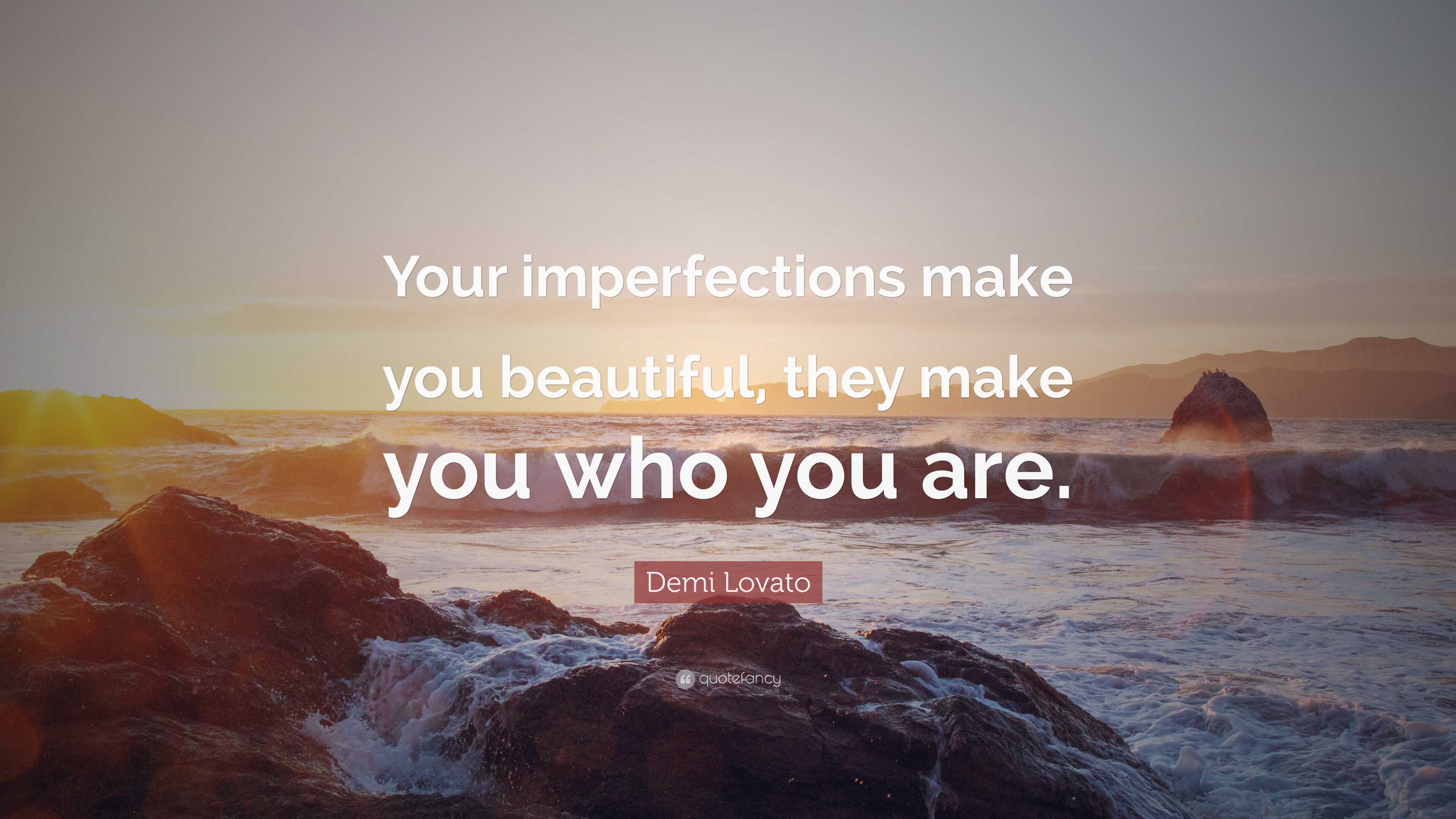
You scroll through your feed, see another “quote of the day” post, and almost skip it—until you read Demi Lovato’s words: “Your imperfections make you beautiful. They make you who you are. So just be yourself. Love yourself for who you are.” Something about it hits differently. Not because it’s new, but because it’s real. And coming from someone who’s battled public scrutiny, addiction, identity struggles, and mental health crises, it carries weight.
This isn’t just a feel-good mantra. It’s a survival strategy. A blueprint for navigating happiness, struggle, human nature, and long-term success—especially in a world that rewards perfection and punishes vulnerability.
Let’s break down why this quote resonates so deeply—and how to live it.
Why Demi Lovato’s Message on Imperfection Matters
Demi Lovato isn’t just a pop star or actor—they’re a cultural mirror. From Camp Rock to Sorry Not Sorry, their journey has been played out in public: eating disorder recovery, bipolar diagnosis, relapse, rehab, advocacy, and rebirth. When they say “your imperfections make you beautiful,” they’re not quoting self-help fluff. They’re testifying.
The power of this quote lies in its defiance of social conditioning. From childhood, we’re taught to hide flaws: cover acne, lose weight, get better grades, act confidently. But Demi flips the script. They argue that the cracks aren’t just acceptable—they’re essential.
Real-world impact: Consider social media, where filters and Facetune sell an illusion of flawlessness. A 2023 study by the Journal of Youth and Adolescence found that teens who regularly edited their photos reported lower self-esteem and higher anxiety. Demi’s message cuts through that noise: You don’t need to be flawless to be worthy.
This isn’t passive acceptance. It’s radical redefinition—of beauty, of value, of success.
The Psychology Behind “Imperfections Make You Beautiful”
At first glance, the idea seems counterintuitive. We associate beauty with symmetry, smoothness, order. But modern psychology backs Demi’s claim.
#### The “Beautiful-Is-Familiar” Effect Research in cognitive psychology shows that people find average, imperfect faces more attractive over time. Why? Because they’re relatable. A slight asymmetry, a crooked smile, a scar—these features signal authenticity. They say, “I’ve lived.”
#### Self-Compassion and Emotional Resilience Dr. Kristin Neff, a leading researcher on self-compassion, identifies three components: self-kindness, common humanity, and mindfulness. Demi’s quote hits all three: - “Love yourself for who you are” → self-kindness - “They make you who you are” → common humanity - “Just be yourself” → mindfulness of identity
People who practice self-compassion report lower levels of anxiety, higher motivation, and greater emotional resilience. They fail, yes—but they don’t collapse under shame.
Example: A singer bombs a live performance. Perfectionists spiral: “I’m a fraud.” But someone grounded in self-acceptance thinks: “I messed up, but I’m still talented. I’ll improve.” That’s the mindset shift Demi’s quote promotes.
Being Yourself in a World That Rewards Conformity
“Just be yourself” sounds simple. But in practice, it’s one of the hardest things to do.
From corporate culture to social circles, we’re pressured to fit in. Wear the right clothes. Use the right slang. Share the right opinions. Authenticity often feels risky.
But Demi Lovato has defied norms repeatedly: - Coming out as non-binary in 2021 - Discussing bipolar disorder openly - Advocating for LGBTQ+ rights and mental health access
Each act was a refusal to conform. Each reinforced their core message: Your truth matters more than approval.
#### How to Practice Authenticity Daily It doesn’t require a viral coming-out post. Start small: - Speak up when you disagree—politely, but clearly - Stop editing your quirks—that laugh, that hobby, that opinion - Set boundaries—say no without over-explaining - Share struggles—not for pity, but for connection
Authenticity isn’t about being loud. It’s about being honest.
Common mistake: Confusing authenticity with oversharing. Being real doesn’t mean dumping trauma on coworkers. It means aligning actions with values.
Happiness Isn’t the Absence of Struggle—It’s Built Through It
Demi’s journey shows that happiness isn’t a destination you reach after fixing everything. It’s a practice forged in the struggle.
Their music reflects this arc: - Skyscraper (2011): A ballad of survival after rehab - Sorry Not Sorry (2017): Reclaiming power after betrayal - Commander in Chief (2020): Political defiance amid personal recovery
Each song emerges from pain—but also strength. That’s the nuance often missed in “happiness” culture. We’re sold quick fixes: buy this, eat that, meditate for 5 minutes. But real joy? It grows in the cracks of hardship.
#### The Myth of “Positive Vibes Only” Toxic positivity—the idea that you should always stay upbeat—can be harmful. It invalidates real pain. Demi’s quote doesn’t say “be happy all the time.” It says “love yourself through the hard parts.”
Use case: Imagine losing your job. Toxic positivity says: “Just stay grateful! Good things come to those who smile!” A self-compassionate approach says: “This hurts. I’m scared. But I’ve overcome before. I’ll get through this.”
The latter is sustainable. The former is denial.
Human Nature: We’re Wired for Growth, Not Perfection
Demi’s message aligns with evolutionary psychology. Humans aren’t built for flawlessness. We’re built for adaptation.
Our ancestors survived because they could learn from mistakes, not because they never failed. Yet modern society treats failure as fatal.
#### The Growth Mindset Connection Psychologist Carol Dweck’s research shows that people with a growth mindset—who believe abilities can be developed—outperform those with a fixed mindset—who believe talent is innate.
Demi’s quote is growth mindset philosophy in pop culture form: - “Imperfections make you who you are” = You’re a work in progress - “Just be yourself” = You don’t need to pretend - “Love yourself” = Your worth isn’t performance-based
Workplace example: An employee receives critical feedback. Fixed mindset: “I’m bad at this. I should quit.” Growth mindset: “This is hard, but I can improve. I’ll ask for help.”
Which mindset leads to long-term success? The answer is obvious.
Success Redefined: Beyond Fame, Fortune, and Filters
Demi Lovato’s definition of success isn’t measured in Grammy counts or Instagram followers. It’s measured in resilience, honesty, and impact.
They’ve had number-one albums. But they’ve also had overdose scares. They’ve hosted talk shows and launched mental health platforms like Casta Mental Health. Their legacy isn’t just music—it’s advocacy.
#### A New Model of Success Traditional success metrics: - Wealth - Fame - Status
Demi-inspired success metrics: - Can I face my struggles without shame? - Do I treat myself with kindness? - Am I helping others feel less alone?
Realistic use case: A college student recovering from an eating disorder starts a blog. It has 200 followers. No ad revenue. But one comment reads: “Your story made me call my therapist today.” That’s success.
True achievement isn’t about external validation. It’s about internal alignment.
How to Apply
This Quote in Daily Life
Inspiration fades if it’s not operationalized. Here’s how to turn Demi’s words into action:
#### Morning Ritual Start the day with a mirror affirmation: “My flaws don’t make me less. They make me real. I am enough.”
#### Digital Detox Unfollow accounts that make you feel “less than.” Follow those that celebrate real bodies, real emotions, real journeys.
#### Journal Prompt “What’s one ‘imperfection’ I’ve been ashamed of? How has it actually shaped my strength?”
#### Conversation Starter Ask a friend: “What’s something you used to hate about yourself that you now accept?” Vulnerability breeds connection.
#### Crisis Response When you fail or feel broken, say: “This doesn’t erase my worth. I’m still me. And I’m still worthy.”
Small actions, repeated, rewire self-perception.
Final Thought: Your Imperfections Aren’t Flaws—They’re Features
Demi Lovato’s quote isn’t just a “feel-good” post. It’s a quiet revolution. A rejection of perfection culture. A call to embrace the messy, awkward, resilient truth of who we are.
Happiness isn’t found in fixing yourself. It’s found in accepting yourself—then growing from that foundation.
Struggle isn’t a sign of failure. It’s part of being human.
Success isn’t fame or fortune. It’s freedom—from shame, from comparison, from pretending.
So the next time you see that quote—“Your imperfections make you beautiful…”—don’t just like it. Live it. Look in the mirror. Name one thing you’ve been hiding. Now, thank it. Because it helped make you, you.
And that’s the most beautiful thing of all.
FAQ
What is Demi Lovato’s most famous quote about self-acceptance? The most widely shared is: “Your imperfections make you beautiful. They make you who you are. So just be yourself. Love yourself for who you are.”
Has Demi Lovato spoken about mental health in relation to this quote? Yes—Demi has openly discussed bipolar disorder, addiction, and body image, framing self-acceptance as key to mental wellness.
How can I practice self-love like Demi Lovato suggests? Start with small acts: affirmations, journaling, setting boundaries, and reducing exposure to toxic social media.
Is this quote from a song, interview, or social media post? It originated from social media and interviews, not a specific song—reflecting Demi’s advocacy beyond music.
Does embracing imperfection mean not striving for growth? No. Self-acceptance is the foundation for healthy growth—not a replacement for it.
How does this quote relate to body positivity? It directly challenges unrealistic beauty standards by affirming that all bodies—flaws and all—are worthy of love.
Can this mindset improve relationships? Yes. When you accept yourself, you stop seeking validation and form more authentic, balanced connections.
FAQ
What should you look for in Demi Lovato’s Quote on Embracing Imperfection and Self-Love? Focus on relevance, practical value, and how well the solution matches real user intent.
Is Demi Lovato’s Quote on Embracing Imperfection and Self-Love suitable for beginners? That depends on the workflow, but a clear step-by-step approach usually makes it easier to start.
How do you compare options around Demi Lovato’s Quote on Embracing Imperfection and Self-Love? Compare features, trust signals, limitations, pricing, and ease of implementation.
What mistakes should you avoid? Avoid generic choices, weak validation, and decisions based only on marketing claims.
What is the next best step? Shortlist the most relevant options, validate them quickly, and refine from real-world results.