Every year, preventable industrial accidents occur because lockout tagout (LOTO) procedures weren’t verified properly. The root cause? A missing or poorly executed periodic inspection — especially when the inspection form is treated as a checkbox task rather than a critical safety checkpoint.
OSHA requires employers to conduct periodic inspections of energy control procedures at least annually. But compliance isn’t just about ticking a box. It’s about ensuring that every machine-specific LOTO process is not only documented but also correctly understood and applied by authorized employees. The key tool in this process? The lockout tagout periodic inspection form.
This isn’t a paperwork exercise. It’s a live diagnostic of your safety culture.
What Is a Lockout Tagout Periodic Inspection Form?
A lockout tagout periodic inspection form is a standardized document used to verify that energy control procedures are being followed correctly and consistently. It’s completed during an observed audit of a live LOTO sequence — not a desk review.
The form records: - Which machine or equipment was inspected - The authorized employee performing the lockout - The type of hazardous energy involved (electrical, mechanical, hydraulic, etc.) - Whether each step in the procedure was executed correctly - Any deviations or non-compliances - Corrective actions required
Crucially, OSHA 1910.147(c)(6) mandates that these inspections be performed by an authorized employee who does not normally perform the servicing on that machine, ensuring objectivity.
Real-World Example: Conveyor System Audit
At a Midwest food processing plant, an inspector used the LOTO inspection form to observe a maintenance technician locking out a conveyor system. The technician applied a lock, but failed to verify zero energy state using a voltage tester. The inspector documented the lapse, triggered retraining, and updated the procedure to include mandatory test steps.
This one audit prevented a potential electrocution incident during future maintenance.
Key Components of an Effective LOTO Inspection Form
A strong form doesn’t just collect data — it drives action. Here are the non-negotiable elements:
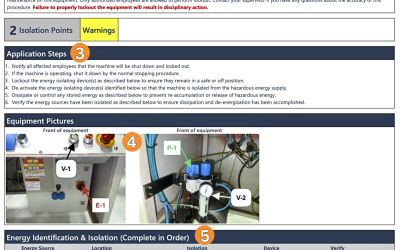
1. Equipment Identification Include asset ID, location, and energy types. Vague entries like “packaging machine” invite confusion.
Better: “Conveyor Line 3B – Electrical (480V), Mechanical (Belt Drive), Pneumatic (Clamp Actuator)”
2. Procedure Verification List each step of the written LOTO procedure and mark whether it was followed. Use a simple Yes / No / N/A format with space for notes.
| Step | Performed? | Notes |
|---|---|---|
| Notify affected employees | Yes | Confirmed via log entry |
| Shut down equipment properly | Yes | Used E-stop and selector switch |
| Isolate all energy sources | No | Pneumatic valve not closed |
3. Employee Interview Section The inspector must confirm the authorized employee understands:

- Why each energy source must be isolated
- How to verify isolation (e.g., trying to start the machine)
- What to do if a lock is damaged or missing
This isn’t a pop quiz — it’s a knowledge validation.
4. Deviations and Corrective Actions Record every failure and assign responsibility and deadline for correction.
Deviation: Lock applied, but no tag with employee name or reason Corrective Action: Retrain employee within 5 days; update tag policy
5. Signatures Must include:
- Inspector (non-authorized for that equipment)
- Authorized employee observed
- Date and time of inspection
Common Mistakes That Void LOTO Inspection Validity
Even experienced teams make critical errors. These mistakes don’t just undermine safety — they create liability.
Mistake #1: Using the Same Person to Perform and Inspect If the technician who does routine lockouts also inspects the process, the audit lacks objectivity. OSHA explicitly prohibits this.
Fix: Rotate inspectors across departments or use safety officers.
Mistake #2: Conducting “Paper Inspections” Some teams fill out the form without observing an actual lockout. This violates OSHA requirements and offers zero safety value.
Fix: Schedule inspections during planned maintenance. No observation = no inspection.
Mistake #3: Failing to Update Procedures
After Deviations Finding a flaw but not updating the written procedure ensures the same error repeats.
Fix: Link every corrective action to a revision in the master LOTO plan.
Mistake #4: One-Size-Fits-All Forms
Using a generic form across all equipment types leads to missed hazards. Hydraulic presses need different checks than robotic arms.
Fix: Customize forms per machine or energy profile.
How to Conduct a Compliant LOTO Periodic Inspection
Follow this proven workflow to ensure each inspection meets OSHA standards and improves safety.
Step 1: Schedule in Advance Coordinate with maintenance teams to inspect during actual servicing. Never audit a “dry run.”
Step 2: Select the Right Inspector Choose someone trained in LOTO who doesn’t normally service the equipment. In smaller facilities, cross-train from another shift.
Step 3: Observe the Full Procedure Watch the authorized employee from shutdown through re-energization. Don’t interrupt — take notes.
Step 4: Verify Each Step Use the form to check:
- Was every energy source isolated?
- Was zero energy state verified?
- Was the tag complete (name, date, purpose)?
- Was re-energization done safely?
Step 5: Interview the Employee Ask:
- “How do you know the machine is de-energized?”
- “What would you do if you found a broken lock?”
- “Who else needs to be notified before re-energizing?”
Step 6: Document and Act Complete the form immediately. Flag critical deviations for same-day action.
Top 5 LOTO Inspection Form Templates (Free & Customizable)

While you can build your own, starting with a solid template saves time and reduces compliance risk. Here are five widely trusted options:
| Template | Source | Format | Key Benefit |
|---|---|---|---|
| OSHA Standard Form 1910.147 | U.S. Department of Labor | Official reference, minimal customization | |
| Lockout/Tagout Inspection Checklist | Creative Safety Supply | PDF / Excel | Visual layout, includes photo fields |
| LOTO Annual Audit Form | SafetyStore.com | Word | Fully editable, includes employee interview section |
| Machine-Specific LOTO Inspector Sheet | EHS Daily Advisor | Pre-filled examples for common equipment | |
| Digital LOTO Inspection Template | SafetyCulture (iAuditor) | Mobile App | Real-time reporting, cloud storage, auto-reminders |
Pro Tip: For high-risk environments, go digital. Apps like iAuditor or Form.com allow photo uploads, GPS tagging, and automated alerts for overdue inspections.
LOTO Inspection Frequency: When “Annual” Isn’t Enough
OSHA requires inspections at least annually, but that’s the floor — not the ceiling.
Consider more frequent checks if: - Equipment is high-risk (e.g., punch presses, chemical valves) - There’s high staff turnover - Previous audits found recurring issues - Procedures have recently changed
A pharmaceutical plant, for example, conducts LOTO inspections quarterly on its reactor systems due to the combination of high-pressure steam and toxic chemicals.
Rule of thumb: The higher the consequence of failure, the more often you inspect.
Also, re-inspect immediately after: - An incident or near-miss - A procedural update - Introduction of new equipment
Integrating LOTO Forms Into Your Safety Management System
A standalone form is useless if it doesn’t feed into broader safety operations.
Link to Training Records Attach inspection results to employee files. Use poor performance as a trigger for retraining.
Audit Your Audits Review past inspection forms quarterly. Look for:
- Patterns of missed energy sources
- Repeated employee errors
- Equipment with frequent deviations
This data should inform your next round of training and procedure updates.
Store Forms Accessibly Keep completed inspections:
- On file at the facility
- Backed up digitally
- Available to auditors within 48 hours
OSHA can request these records during an inspection. If you can’t produce them, you’re out of compliance.
The Bottom Line: Your LOTO Inspection Form Is a Lifesaver
A lockout tagout periodic inspection form isn’t bureaucracy — it’s your frontline defense against catastrophic injury. When done right, it: - Validates that procedures work in practice - Identifies knowledge gaps before they cause harm - Creates a documented trail of compliance - Reinforces a culture of safety accountability
Don’t wait for an OSHA citation or a preventable accident. Review your current form. Is it machine-specific? Does it require observation? Does it drive corrective action?
If not, revise it now.
Then schedule your next inspection — not because the calendar says so, but because safety depends on it.
Frequently Asked Questions
What is the OSHA requirement for lockout tagout periodic inspections? OSHA 1910.147(c)(6) requires documented inspections at least annually, conducted by an authorized employee who does not perform the servicing.
Who can perform a LOTO periodic inspection? An authorized employee who is not routinely assigned to lock out that specific equipment, ensuring an objective review.
Can digital forms be used for LOTO inspections? Yes, digital forms are acceptable as long as they are complete, signed (electronically if compliant), and accessible for audits.
What happens if a deviation is found during inspection? The deviation must be documented, and corrective actions — such as retraining or procedure updates — must be implemented promptly.
Do all machines need individual inspection forms? Ideally, yes. Each machine has unique energy sources and lockout steps, so inspection forms should be equipment-specific.
Is employee retraining required after every inspection? Only if the inspection reveals inadequate knowledge or procedure failures. Retraining must occur promptly in those cases.
Can a supervisor sign off without observing the lockout? No. The inspection must be based on direct observation of a live lockout procedure. Paper-only audits are not compliant.
FAQ
What should you look for in Lockout Tagout Periodic Inspection Form Best Practices? Focus on relevance, practical value, and how well the solution matches real user intent.
Is Lockout Tagout Periodic Inspection Form Best Practices suitable for beginners? That depends on the workflow, but a clear step-by-step approach usually makes it easier to start.
How do you compare options around Lockout Tagout Periodic Inspection Form Best Practices? Compare features, trust signals, limitations, pricing, and ease of implementation.
What mistakes should you avoid? Avoid generic choices, weak validation, and decisions based only on marketing claims.
What is the next best step? Shortlist the most relevant options, validate them quickly, and refine from real-world results.